
Puberty Is Not A Preference
And it's not a passing phase, either.

A few months ago now-Senate candidate Ken Paxton, he of nine major charges of lawbreaking, charged a faculty member of the UT Southwestern Medical Center (Dallas) with the crime of providing professionally-approved healthcare to transgender youth. Another such exercise forced a Dallas pediatrician from the same medical center to leave the state. But these were mere opening salvos. Federal criminal subpoenas have now been issued, demanding the medical information of youths who might have received trans healthcare – including personal identification. Penalties for noncompliance are up to 20 years in prison.
This has all been widely reported, and covered admirably by Erin Reed on Substack. It is most likely just another early step in what the Lemkin Institute has identified as the beginning of genocide. That front has many sectors. My focus here is on just one of them: the science that the Trump regime denies as it seeks to deny healthcare to transgender children.
The lawsuits have called out “gender-affirming care,” but since surgeries are nearly nonexistent for anyone under 18 this means puberty blockers (which I’ll call “PBs” for brevity), Their chemistry has important policy implications, and warrants a capsule introduction.
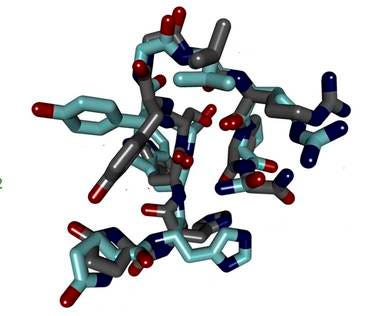
Biochemically, puberty is simply the appearance of the “sex hormones” testosterone and estrogen. (They do much more than define and control sex, hence the quotes.) But one deceptively simple biochemical action requires many initiating and controlling steps. This one begins with nerve signals to the hypothalamus, which produces short pulses of a simple ten-unit peptide (a chain of amino acids) abbreviated “GnRH.” GnRH then binds to a receptor protein, and that complex triggers the release of intermediate hormones which in turn cause the release of those sex hormones.
Here’s the critical point: the receptor only responds if the GnRH comes in short pulses. PBs are simply peptides almost identical to the real thing, differing just enough to thwart the receptor. A single amino acid substitution suffices. Thus no foreign hormones are being put into the adolescent’s body. It’s effectively as if a key with one wrong nub is put into a lock and it jams – it’s still a key. In fact, mutations producing inactive GnRH are well known. This leads to deficiency of the adult hormones, resulting in delayed puberty and infertility. Decreased bone density and increased risk of type II diabetes are minor side effects, whose statistics are vigorous debated. Those effects come after many years, and it’s not even clear if they’re symptoms or causes. This isn’t meant to argue that PBs are harmless. They affect vital parts of physiology, and expert supervision is essential – just as it is for any drug. But it’s patently false to say that they’re medically unknown or poorly studied.
Those interested in the gory details of PB safety and side effects can find a copious set of journal references, succinctly organized with context, in this summary written by professors at the Yale University medical and law schools. The bottom line: when used with competent medical oversight, they are as safe as any other drug that has meaningful effects. As Lynn Gillam and colleagues in Australia succinctly put it (in an open access review): “Most physical risks associated with PBs and gender-affirming hormones can be managed. ...the effects of these treatments, which have now been used for over two decades in adolescents, are well documented.”
But side effects are only one part of the story. The justification for this intervention most widely cited by professionals is “improved mental health,” and specifically reduced risk of suicide. Clearly those are vital. Adolescence is a challenging time, with major risks even without gender identity issues. But what about the rest of life? One might conclude from the critics that if only there were some other way to get the child to the age of 18, then the alleged PB risks (even if small) are surely not worth it.
They are. And the reason lies specifically in the impact of what adolescence brings: body shape, voice, facial hair (or its absence). Altering them ranges from difficult (and expensive) to impossible, and their effects are always there, every moment, for the rest of our lives. People frequently dislike some body features that they can’t change. But that is not a reason to reject interventions that we can change, when those features are so debilitating.
PBs haven’t been available to trans adolescents long enough to provide adequate older adult cohorts for academic papers. Seen from five years out: they’re a treasure. For more, just take a look at any anti-troll-protected online forum in which trans adults expose the raw agony of what they’ve been through, and the measures of peace that come with those difficult and expensive, and still imperfect, damage-mitigating procedures.
Or you can read Hanna’s Ascent.
The mantra of anti-affirming snipers is: “If you can’t drive a car until you’re eighteen then you shouldn’t be making such life-changing decisions before then.” Of course trans kids are almost always making that decision with parents. But regardless: these children have in most cases known what they wanted for close to a decade when adolescence sets in. (I knew when I was five – with no one to even tell me what it meant.) With the guidance of professionals, they are absolutely ready to make that decision – one that is literally life-saving, not only from physical suicide, but from the social and mental destruction of the rest of their lives.
The image is the structure of the GnRH molecule. It’s really that simple - every atom and bonding is shown except the hydrogens.
This Substack is free (though tips are welcome!) because I want the information to get out, and I want people to buy my novel, which is relevant and needed as never before. It’s also good literature and a good read! Please check it out at https://www.bedazzledink.com/hannas-ascent!
